
How to fax a document to a court clerk under the court’s rules
Where courts publish whether they take faxes, what their cover sheets ask for, how many pages they allow, and how to keep a transmission record.
 Merey Tleugazin, founder of Faxvio
Updated · 11 min read
Faxing a court, in short
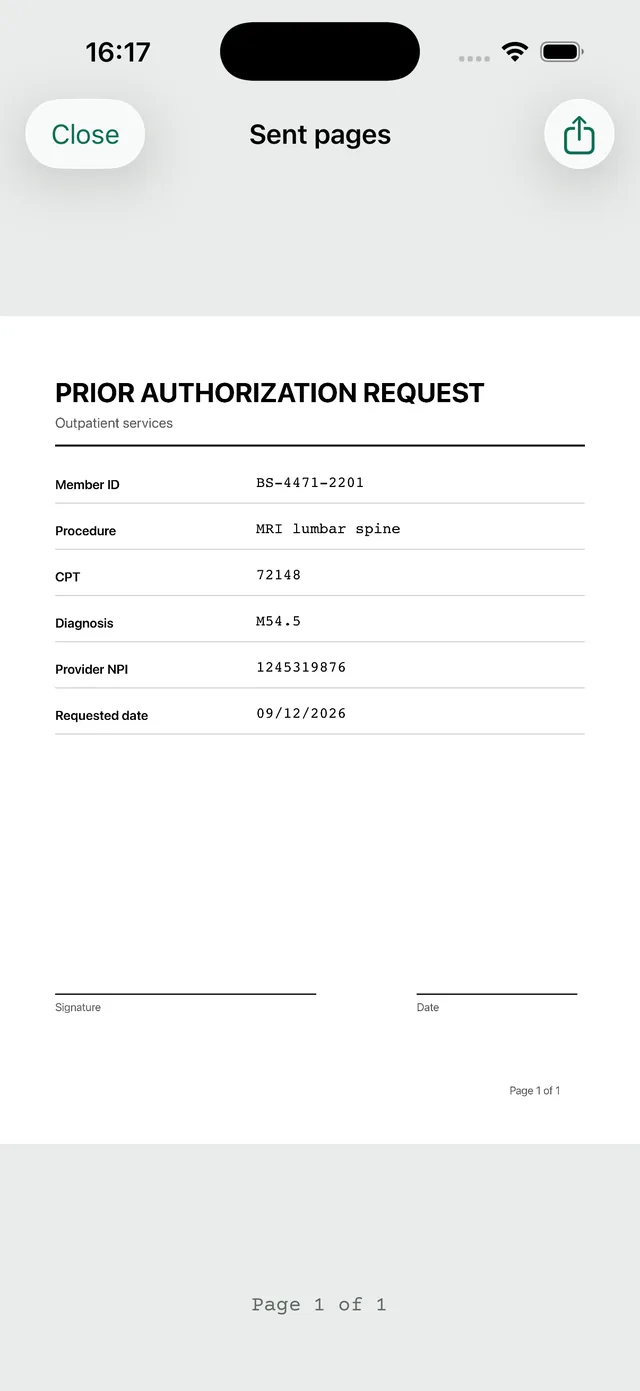
To fax a document to a court, first read the court’s own fax-filing rule on its website: many federal courts refuse faxed filings, while some state and county courts accept them with a cover sheet, a page limit and a fee. If yours accepts fax, put its cover sheet with the case number first, send the PDF from here, and keep the receipt.
- 1Find the court’s rule under Local Rules, Clerk’s Office or Forms & Filing.
- 2Fill in its cover sheet with the case number, caption and page count.
- 3Send one PDF to the clerk’s fax number, within the page limit.
- 4Keep the receipt with your copy of the signed original.
10–50
page limits in the rules quoted here
$1.99
for a 7-page filing on Faxvio
transmission record
Send yours from here
Faxvio’s cover page goes first, titled for the clerk in the Subject field; add your case number there. Make the court’s own cover sheet page 1 of your PDF.
- Pages
- Number
- Send
Ready to go.
Check your email
We sent a 6-digit code to . Type it here to go on.
By continuing you accept the Terms and Privacy policy.
Pages for this fax
One payment, nothing renews. Card, Apple Pay or Google Pay on the next screen.
Do courts accept documents by fax?
Some do, many do not, and each court says which in its own rules.
There is no single answer for the United States, because each court sets its own filing rules within its state or federal framework. What can be said is where the answer is written down, and what it tends to look like.
Federal courts file electronically. U.S. Courts describes CM/ECF as “the federal Judiciary’s system that allows case documents, such as pleadings, motions, and petitions, to be filed with the court online”, used mostly by attorneys, and adds: “Some courts permit bankruptcy claimants and pro se litigants to file using CM/ECF.” Federal district courts tend to say no to fax plainly. The District of Utah’s FAQ: “Documents produced via facsimile transmission are not deemed acceptable.” The District of Delaware: “No pleadings or other documents shall be submitted to the Court for filing by facsimile or electronic mail transmission without prior leave of Court.”
State and county courts vary more. Nebraska has a statewide rule that, as it stands, says: “Until July 1, 2028, unless advanced or extended by the Nebraska Supreme Court, every court in the State of Nebraska shall accept for filing by a non-attorney a fax transmission of any pleading, motion, or other document, except for briefs in the appellate courts”, with a 10-page limit per transmission excluding the cover sheet. The Court of Common Pleas in Clermont County, Ohio answers “Yes. Fax filing is provided for in LOCAL RULE 17.” The trial court clerk in Davidson County, Tennessee “shall accept papers for filing by facsimile transmission” under Local Rule 5A. And the Superior Court in Calaveras County, California takes faxes only through a fax filing agency: “The court does not accept the direct fax filing of documents pursuant to California Rule of Court, Rule 2.304 except upon exceptional circumstances and after obtaining leave of court.”
So the first step is never the fax. It is the rule. This page does not give legal advice and cannot tell you whether your document may be faxed to your court; the court’s rule, its clerk, or a lawyer can.
Six courts, six fax rules
| Court | Fax filing | Page limit | In the court’s words |
|---|---|---|---|
| U.S. District Court, District of UtahFederal | Not accepted | — | “Documents produced via facsimile transmission are not deemed acceptable.” |
| U.S. District Court, District of DelawareFederal | Only with leave | — | “No pleadings or other documents shall be submitted to the Court for filing by facsimile or electronic mail transmission without prior leave of Court.” |
| Nebraska courts (Neb. Ct. R. § 6-601 to 6-612)State | Accepted | 10 pagesexcluding the cover sheet; more with the clerk’s prior approval | “Until July 1, 2028, unless advanced or extended by the Nebraska Supreme Court, every court in the State of Nebraska shall accept for filing by a non-attorney a fax transmission of any pleading, motion, or other document, except for briefs in the appellate courts” |
| Clermont County Court of Common Pleas, OhioCounty | Accepted | 30 pagesincluding exhibits | “Does the Clermont County Common Pleas Court accept fax filing? Yes. Fax filing is provided for in LOCAL RULE 17.” |
| Davidson County trial courts, Nashville, Tennessee (Rule 5A)County | Accepted | 50 pagesincluding the cover sheet | “The trial court clerk shall accept papers for filing by facsimile transmission as provided in this rule.” |
| Superior Court of California, County of CalaverasCounty | Through an agency | — | “The court does not accept the direct fax filing of documents pursuant to California Rule of Court, Rule 2.304 except upon exceptional circumstances and after obtaining leave of court.” |
Page limits, against what one fax carries
Where a court accepts fax, it caps the size. Nebraska allows 10 pages per transmission, excluding the cover sheet, and more “with prior approval of the clerk at the receiving court”. Clermont County will not take “Filings that exceed 30 pages, including exhibits”. Nashville’s limit is 50 pages including the cover sheet, and its rule adds that “A facsimile filing may not be split into multiple facsimile transmissions to avoid this page limitation.”
Faxvio sends up to 50 pages in one fax, so the court’s limit, not the sender’s, is the one that binds. Remember that to a US number Faxvio puts its own cover page in front: a rule that counts the cover sheet may count that page too, so ask the clerk, and leave yourself a page of room.
Where does a court publish its fax-filing rule?
On its own website, almost always in one of four places. Work down the list until you find it.
- 1Local Rules. The court’s local rules, sometimes with a separate set of administrative procedures for electronic filing. Search the PDF for “facsimile” as well as “fax”; older rules use the long word. Delaware’s rule sits in its “Administrative Procedures Governing Filing and Service by Electronic Means”.
- 2Clerk’s Office. The clerk’s page often has a short notice or FAQ, like Utah’s “Do you accept faxed documents?” or Clermont County’s “Fax Filing FAQs”.
- 3Forms & Filing. Courts that accept faxes often publish the cover sheet form and the fax number here; Calaveras County’s “Fax Filing” page sits under Forms & Filing and says which route it takes.
- 4The state’s court rules. Some states set one rule for every court, like Nebraska’s §§ 6-601 to 6-612 on fax filing; the state judicial branch site publishes them.
To find a federal court’s website, use the U.S. Courts court website links, which list every court of appeals, district court and bankruptcy court. For a state court, start from the state’s judicial branch site and the county court’s own page. If the website says nothing, call the clerk’s office and ask two questions: do you accept filings by fax, and where is the rule. Clerks can tell you the procedure; they cannot give legal advice either.
Note what the rule calls fax. Clermont County defines “facsimile transmission” as a machine that “encodes a document into optical or electrical signals, transmits and reconstructs the signals to print a duplicate”, and adds: “This does not include email.” An online fax service such as Faxvio dials the court’s fax machine like any other fax; email does not.
What goes on a court fax cover sheet?
The case number first, then what the rule lists. Use the court’s own form when it has one.
A cover sheet is how a clerk files a fax without opening it. The rules quoted here agree on the core: the case number, the caption, the title of the document, the number of pages and who sent it. Nebraska requires the Supreme Court’s uniform cover sheet with “the sender’s full name, address, telephone number, and fax number” and the number of pages. Clermont County lists ten items, from “the name of the court” and “the case number” to “the transmitting fax number”, and says that without them “the Clerk is authorized to reject the filing.”
If no case number has been assigned yet, Clermont County asks you to “state that fact on the cover page”. Nebraska also asks that each page carry its number in the transmission, “e.g., ‘1 of 10,’ ‘2 of 10’”; if your PDF does not have them, add them in Preview or Acrobat before you send.
| Item | Nebraska | Nashville | Clermont County |
|---|---|---|---|
| Case number (docket number) | — | ✓ | ✓ |
| Caption or title of the case | — | ✓ | ✓ |
| Title of the document | — | ✓ | ✓ |
| Name of the court and the judge | — | — | ✓ |
| Number of pages | ✓ | ✓ | ✓ |
| Sender’s name, address, phone and fax number | ✓ | ✓ | ✓ |
| Date of the transmission | — | ✓ | ✓ |
| Filing instructions for the clerk | — | ✓ | — |
Two cover pages: the court’s, and the one Faxvio adds
A fax to a US number has to carry the sender’s name, so Faxvio always puts its own cover page in front of a fax to a US court. It shows To, From, a subject, the date and the page count, and it is never charged. It is not the court’s cover sheet: it has no field for the case number or the caption.
So make the court’s cover sheet the first page of your PDF, filled in as its rule asks, and let Faxvio’s page go in front of it. When you send from this page the subject reads “Court filing: see the court cover sheet”, which points the clerk to the right page. In the page count on the court’s sheet, count your PDF; if the rule counts the cover sheet, ask the clerk whether the sender’s page counts too. For a blank cover sheet when the court has no form, use the fax cover sheet tool.
How to fax the filing from this page
- 1Make one PDF, the court’s cover sheet first, then the document and any exhibits the rule lets you fax, on letter-size pages.
- 2Check it at fax resolution. Drop it into the fax quality preview: a signature, a stamp or a small-print exhibit must survive black and white.
- 3Add it to the form and type the clerk’s fax number exactly as the rule or the court’s page prints it. A number starting 800, 833, 844, 855, 866, 877, 888, 900 is toll-free or premium and uses 2 pages per page.
- 4Type your name in From and send. Sign in with Google, Apple or an email code when asked.
- 5Wait for Delivered and download the receipt. The median time from Send to Delivered across real Faxvio faxes, September to November 2026, was 66 seconds, about 35 seconds a page on average.
Watch the clock as well as the pages. Nashville’s rule, for one, treats a fax “received by the clerk after 4:30 p.m. but before midnight” as filed that business day, and uses the time “printed on the facsimile transmission by the clerk’s facsimile machine”. Other courts set other cut-offs, and a busy clerk’s line can hold a fax on Sending; send well before a deadline.
On signatures, the rules quoted here accept a faxed signature: Nebraska says a signature on a fax “is an original signature for the purpose of the fax filing only”, and Clermont County allows “/s/” followed by the name. Both expect you to keep the signed original.
What does it cost to fax a court filing?
Two prices can apply, and they are separate. The first is the court’s own: Nashville’s Rule 5A sets “a service charge for each facsimile filing in the amount of five dollars ($5.00) plus one dollar ($1.00) per page of the facsimile filing (including the cover sheet)”, paid to the clerk, and filing fees still apply where they apply. The court’s rule tells you what it charges and how to pay it.
The second is the cost of sending. On Faxvio a 3-page filing is $1.09, a 7-page one $1.99, and 20 pages $4.99; a fax of the full 50 pages is $9.99. The cover page Faxvio adds is never charged, your first page is on us the first time you sign in on the web, and if the fax fails the pages return to your balance. There is no subscription; see the four packs.
How do you prove the court got your fax?
Often the clerk will not tell you. Keep your own transmission record.
Do not wait for the court to confirm. Nebraska’s rule: “A clerk is not required to acknowledge that a fax transmission has been received or accepted for filing.” Clermont County: “The Clerk of Court does not acknowledge receipt of a successful fax transmission.” Nashville’s rule puts the risk on the sender, “including, without limitation, malfunction of facsimile equipment … incorrectly dialed telephone numbers; or receipt of a busy signal”, and, where a transmission fails, lets the sender ask the court to accept the filing with a motion “accompanied by the sender’s transmission record”.
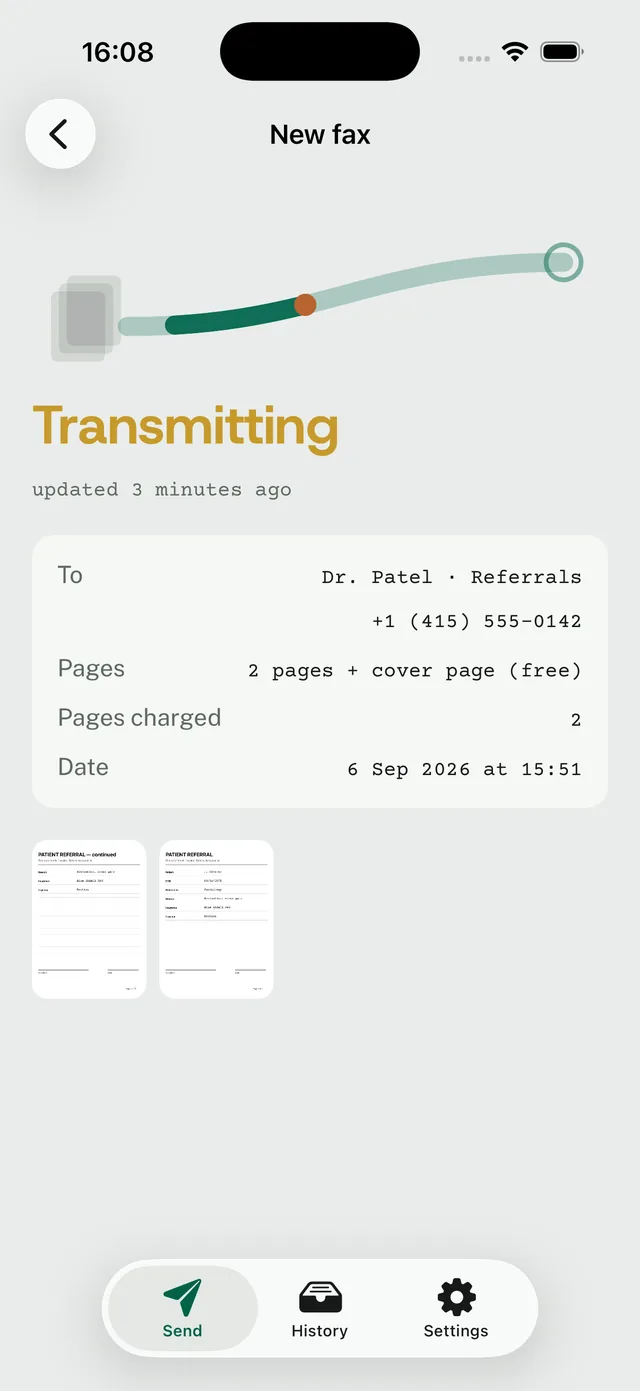
Faxvio’s PDF receipt is that record: the clerk’s number in full, the date and time, the pages transmitted, a transmission ID, the time the receiving machine confirmed the pages and the same moment in UTC, stamped Delivered. Faxvio stamps Delivered only when the carrier reports the fax delivered, after the clerk’s machine has confirmed every page. A failed fax is stamped Returned with the reason, such as “The line stayed busy.”, and its pages return to your balance. What a fax confirmation proves explains every field.
The receipt proves the clerk’s machine accepted your pages at that time. Whether the filing was accepted is the clerk’s decision under the rule; check the docket, or call the clerk’s office with the time on your receipt. Keep the signed original as the rules require, together with the receipt. The document itself leaves Faxvio’s server as soon as the carrier accepts the fax, and your account keeps the record of the fax for 90 days, so download the receipt and file it with your case papers.
Faxing a court: the facts
| Where the rule is | The court’s own website Local Rules, Clerk’s Office, Forms & Filing or FAQ; federal courts via uscourts.gov court website links. |
|---|---|
| Federal courts | Usually no fax Utah: not acceptable; Delaware: only with prior leave. Filing is through CM/ECF. |
| State and county courts | Some accept fax Nebraska (non-attorneys), Clermont County OH, Davidson County TN; Calaveras CA through an agency. |
| Page limits quoted | 10 to 50 pages Nebraska 10 excluding the cover; Clermont 30 with exhibits; Nashville 50 with the cover. |
| Cover sheet | The court’s own Case number, caption, document title, pages, sender details; Faxvio’s cover goes in front. |
| Cost of sending | $1.99 for 7 pages $1.09 for 3; up to 50 pages in one fax. Court service charges are separate. |
| Time to deliver | About a minute Median 66 seconds from Send to Delivered; 79 % under 2 minutes. |
| Proof | Your transmission record Clerks often do not acknowledge faxes; the PDF receipt is your record. |
Questions people ask
Can you fax documents to a court?
Only where that court’s rules allow it. Many federal district courts take filings through CM/ECF and refuse faxes: the District of Utah says “Documents produced via facsimile transmission are not deemed acceptable.” Some state and county courts accept fax filing under a local rule, with a cover sheet, a page limit and often a fee.
How do I find out if my court accepts fax filing?
Look on the court’s own website, under Local Rules, Clerk’s Office, Forms & Filing or the FAQ, or call the clerk’s office. Federal courts are listed on the U.S. Courts “Court Website Links” page; state courts on each state’s judicial branch site.
What goes on a fax cover sheet to a court?
Whatever the court’s rule lists. The rules quoted on this page ask for the case number, the caption, the title of the document, the number of pages, the sender’s name, address, phone and fax number, and the date. Many courts publish their own cover sheet form; use it if they do.
Is a faxed document considered filed when it is sent?
Each court’s rule decides. Nebraska’s says “filing is complete only after the receiving clerk’s acceptance for filing”. Nashville’s Rule 5A counts the time printed by the clerk’s own machine. Read your court’s rule; this page does not give legal advice.
Will the clerk confirm that my fax arrived?
Often not. Nebraska’s rule says “A clerk is not required to acknowledge that a fax transmission has been received”, and Clermont County’s clerk “does not acknowledge receipt of a successful fax transmission”. Your own transmission record is what you keep.
How many pages can I fax to a court?
The court sets it. Among the rules on this page: Nebraska 10 pages excluding the cover sheet, Clermont County 30 including exhibits, Nashville 50 including the cover sheet. Faxvio sends up to 50 pages in one fax.
Can I fax a document to federal court?
Usually not as a filing. The District of Delaware’s rule: “No pleadings or other documents shall be submitted to the Court for filing by facsimile or electronic mail transmission without prior leave of Court.” Attorneys file through CM/ECF; U.S. Courts notes that “Some courts permit bankruptcy claimants and pro se litigants to file using CM/ECF.” Check the specific court’s rules for self-represented filers.
Does a court charge for fax filing?
Some do, on top of any filing fee. Nashville’s Rule 5A sets a service charge of five dollars plus one dollar per page, including the cover sheet. That is the court’s charge; what Faxvio charges for sending is separate and shown before you pay.
Bottom line
Whether a court takes a filing by fax is set by that court’s own rule, published on its website: the District of Utah does not accept faxed documents, the District of Delaware needs prior leave, while Nebraska’s courts accept faxes from non-attorneys and county courts such as Clermont, Ohio and Davidson County, Tennessee accept them with a cover sheet and a 30 or 50-page limit. Where fax is allowed, Faxvio sends up to 50 pages, $1.99 for 7, and gives you a PDF transmission record.
Make your fax better before you send it
Free tools that run in your browser. Nothing is uploaded.
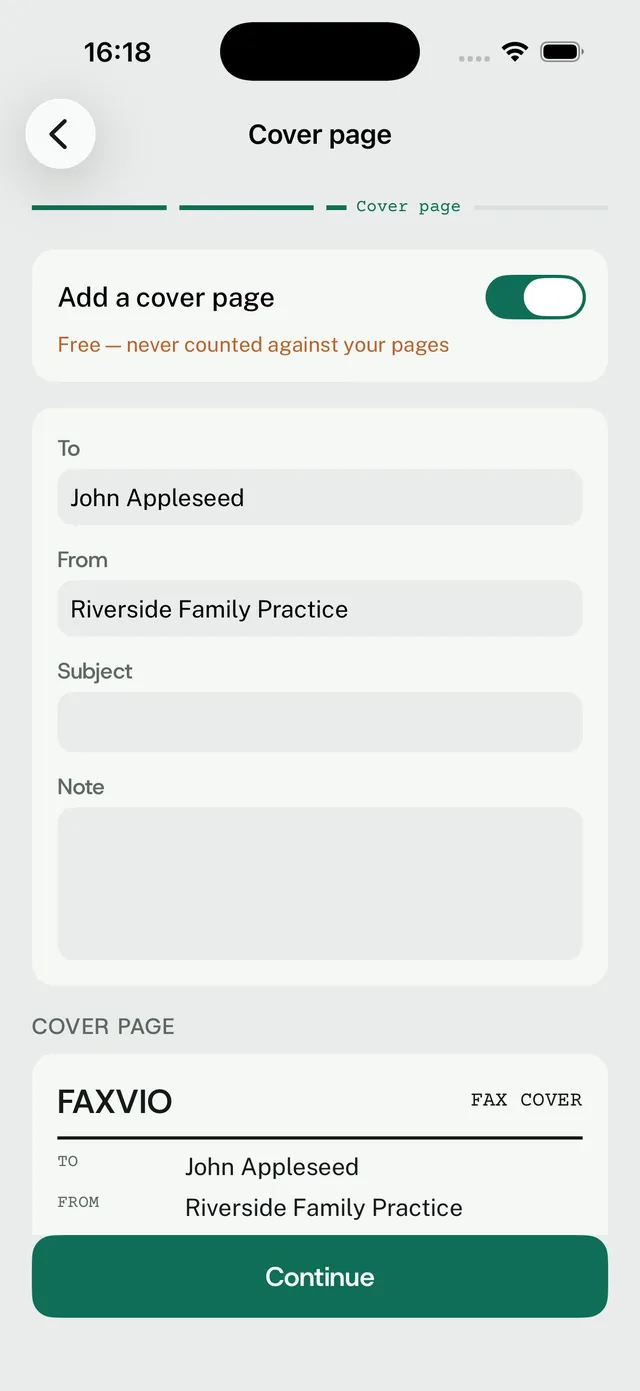
Add a cover sheet
Fill in To, From and a note. It becomes the first page and is never charged.
Make a cover sheet →See it in black and white
Drop a photo of a page and see what a fax machine will actually print.
Preview a page →
Check the number first
See the exact number Faxvio will dial, and whether it costs extra, before you pay.
Check a number →